

Digital signage has become a familiar part of modern environments. From retail stores and restaurants to transport hubs and public venues, what was once a static display medium has evolved into a flexible, software-driven communication tool.
Now, with the introduction of Artificial Intelligence (AI), digital signage is entering a new phase: one where screens don’t just display content, but adapt, respond, and optimise in real time.
In this blog, we explore what AI actually is in this context, how it integrates with digital signage systems, and the key benefits it delivers to businesses.
What is Artificial Intelligence?

Artificial Intelligence refers to systems that can process information, learn from data, and make decisions without constant human input. Rather than following fixed instructions, AI models improve over time based on patterns and behaviour.
In practical terms, AI in business applications often includes:
• Machine learning (identifying patterns in data)
• Computer vision (understanding visual inputs like images or video)
• Natural language processing (interpreting human language)
These technologies are already widely used across industries to automate processes, improve accuracy, and support faster decision-making.
How AI integrates with digital signage

Traditional digital signage relies on pre-scheduled content: what’s shown is decided in advance. AI changes that model completely. When integrated into signage systems, AI allows screens to:
• Analyse audience behaviour in real time
• Adjust content based on location, time, or viewer profile
• Continuously improve performance using collected data
This turns signage into a dynamic communication channel, rather than a one-way broadcast tool.
Key benefits of AI in digital signage
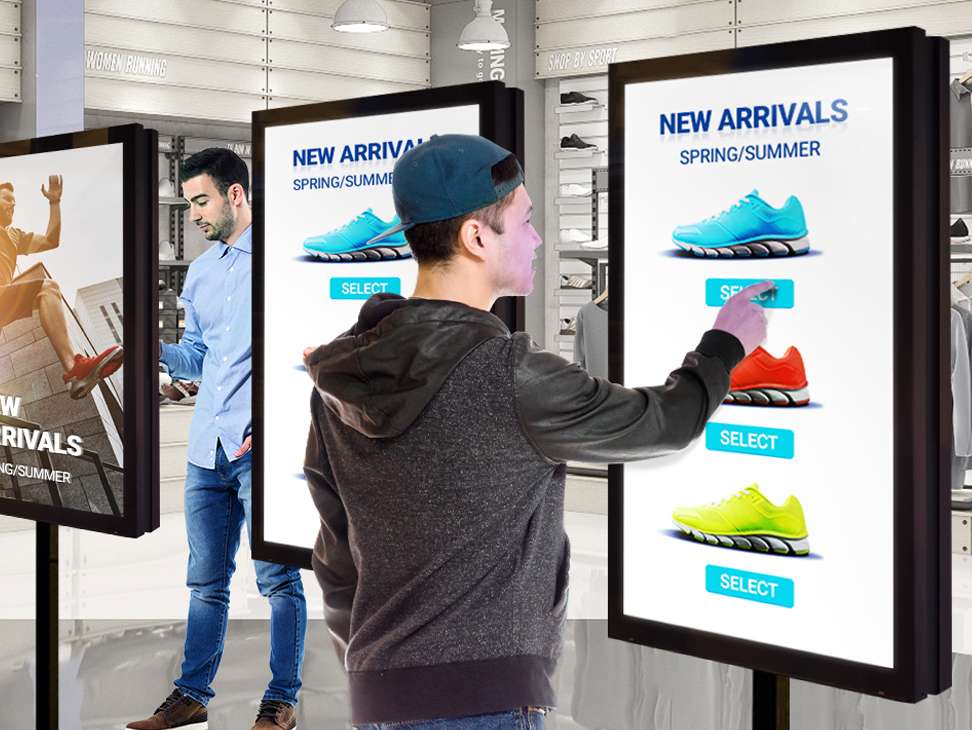
• Smarter data, better decisions
AI-powered signage systems can gather and interpret large volumes of data, including movement patterns, dwell time, and engagement levels. This allows businesses to move beyond assumptions and make data-led decisions about what content to display, when, and where.
• More relevant content delivery
Instead of showing the same message to everyone, AI enables content to be tailored to specific audiences. For example, messaging can shift based on time of day, customer demographics, and behavioural patterns. This relevance increases the chances that viewers will actually engage with what’s on screen.
• Personalised customer experiences
AI enables aligning signage content with individual preferences or past behaviour. In retail environments, this could mean promoting products related to previous browsing activity or highlighting offers that match customer interests – helping bridge the gap between online and in-store experiences.
• Increased engagement through interactivity
AI also supports more interactive formats, transforming passive screens into engaging touchpoints. Content can respond in real time, while interactive elements such as quizzes, motion-based triggers, or adaptive visuals encourage users to actively participate rather than simply watch.
• Continuous content optimisation
One of AI’s biggest advantages is its ability to improve over time. By analysing performance data, AI can refine which visuals attract attention, how long content should be displayed, and what messaging drives the best results. This ongoing optimisation ensures signage remains effective without constant manual adjustments.
• Improved efficiency and reduced costs
Automation plays a major role in AI-driven signage systems. Content scheduling, targeting, and performance tracking can all be handled automatically, reducing the need for manual input and lowering operational costs. At the same time, digital delivery removes the ongoing expense associated with traditional print-based advertising.
Why it matters
AI is not just an enhancement to digital signage – it fundamentally changes how it works. By combining real-time data, automation, and adaptive content, businesses can deliver more relevant messaging, improve audience engagement, and make better use of their advertising space.
What’s next
While the benefits are significant, AI in digital signage also presents important considerations, including data privacy concerns and technical complexity. In our next blog, we’ll explore the challenges of implementing AI in digital signage and the emerging trends shaping its future.