Digital display trends are reshaping how businesses speak to customers in 2026. Screens are brighter, smarter and more interactive than ever, and they now appear in shops, restaurants, offices and public spaces. As a result, businesses have more opportunities to deliver clear, timely and visually engaging messages. Businesses that keep pace with these changes can communicate faster and build stronger connections.
This article explores the most important digital display trends for the year ahead. You will see how modern high-impact digital display screens can capture attention, how interactive technology can encourage engagement and how smarter software simplifies management. In addition, practical advice will help you choose a digital signage display that suits your goals.
What Are the Main Digital Display Trends in 2026?
The biggest digital display trends share one theme: more relevant communication. Screens are moving from simple advertising tools to flexible communication channels. High-definition panels deliver sharper images, while brighter output keeps content readable in many lighting conditions. Meanwhile, software lets businesses schedule messages by time, place and audience. Digital signage offers businesses greater flexibility to deliver timely information compared with traditional printed posters. Consequently, businesses are increasingly using commercial digital signage displays alongside or instead of printed materials, with content that can be updated quickly and hardware designed for extended operation.
Trends shaping customer communication include:
- Higher resolution and brighter panels
- Touch and interactive experiences
- Flexible shapes and creative installations
- Remote, cloud-based content control
- Energy-efficient hardware design
Understanding these shifts helps you plan technology that stays useful for years rather than months.
Digital Display Trends in Food and Hospitality
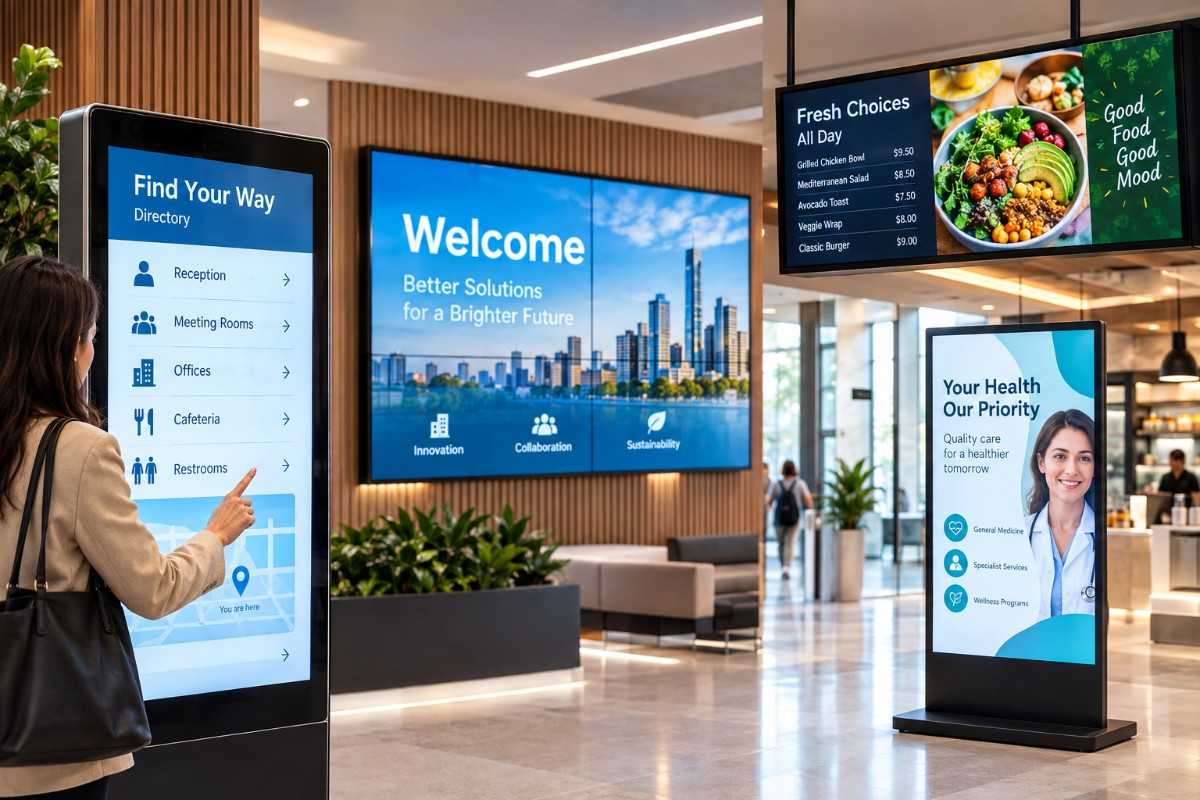
Digital screens are widely used across cafés, restaurants and hotels, with applications continuing to develop. Menus change with the time of day, stock levels and seasonal offers. Unlike printed boards, digital menu display screens can be updated quickly and display appetising imagery to help promote menu items. Clear, well-designed digital menus can help customers make decisions efficiently and support smoother service. Hotels use similar screens to promote dining, spa services and local events in reception areas and lift lobbies.
Better Menus, Smoother Service
Animated menus can highlight bestsellers, daily specials and dietary labels clearly. With a compatible content management system, staff can update menu information across connected screens, helping maintain consistent information and reduce the risk of outdated content.
Guest Information and Promotions
Beyond menus, hospitality screens help guests find their way and discover services. Hospitality screens often show:
- Daily specials and seasonal dishes
- Opening hours and event notices
- Spa, dining and activity promotions
- Directions to meeting rooms and facilities
Digital Display Trends on the High Street
Shopfronts are changing too. Retailers want to attract people who pass by, and shopfront digital displays can offer greater flexibility and visual impact than traditional printed posters. Bright, moving visuals can help attract attention, while scheduled content lets shops promote new arrivals in the morning and evening offers later. When installed behind shopfront glazing, the display benefits from protection against direct exposure to rain and public handling. Brightness is key, since sunlight can wash out weaker panels, so shops should choose displays designed to perform well in bright daylight.
Turning Footfall into Visits
A strong window message is short, bold and clear. Show one product or one offer at a time, and include a simple call to action, such as an opening time or an offer end date. Rotating content can help keep messaging fresh for regular passers-by.
Consistent Brand Presence
Consistent colours, fonts and imagery across screens can help strengthen brand recognition. Retail window content ideas include:
- New arrivals and featured products
- Seasonal campaigns and events
- Store opening hours and services
- Short brand videos with clear messages
Interactive Experiences and Customer Engagement
Interactive displays offer customers opportunities to engage directly with content rather than simply view it. An interactive flat panel display lets visitors browse products, explore maps or complete simple tasks with a touch. In showrooms, this can create a more engaging experience, and in meeting rooms it supports collaboration. Where supported by compatible software and analytics, interactive displays can provide insights into which content visitors select. Moreover, touch screens can reduce reliance on printed brochures, potentially supporting sustainability goals. As interactive technology becomes more accessible, expect it to appear in more public and commercial spaces.
Self-Service and Guidance
Self-service screens can help reduce waiting times and free staff to focus on more personalised tasks. Common interactive uses include:
- Product browsing and digital catalogues
- Appointment and visitor check-in
- Building and campus directories
- Training and presentation sessions
Flexible Formats and Creative Installations
Another strong trend is the move towards creative screen shapes. Standard rectangles still work, but stretched formats can fit narrow walls, shelf edges and ceiling-height spaces. Wide, slim displays suit transport platforms, supermarket aisles and corporate corridors, where space is limited. For these locations, slim stretch-format screens provide an eye-catching way to share information without taking up valuable floor area. Designers now treat screens as part of the architecture, blending technology with branding. This approach can create a modern appearance and help messages stand out.
Making Use of Awkward Spaces
Many buildings have narrow or unusual spots that standard screens cannot fill. Slim formats can turn these spaces into useful communication points. Ideal places for slim displays include:
- Shelf edges and aisle ends
- Narrow walls beside entrances
- Station platforms and corridors
- Reception counters and service desks
Choosing the Right Solution for Your Business
With so many options, choosing wisely matters. Start with your goal, such as attracting visitors, informing staff or speeding up service. Then consider viewing distance, lighting and daily operating hours. Commercial-grade hardware is designed for extended daily operation, making it better suited to demanding commercial environments than standard domestic screens. It is also helpful to review real examples before deciding. Beten’s real-life display case studies show how different organisations have applied digital screens in practice, which can guide your own plans and help you avoid common mistakes.
Plan for Support and Warranty
Reliable technical support and a clear warranty protect your investment over many years. Ask suppliers about installation help, remote assistance and replacement parts before you decide. Questions to answer before choosing a screen include:
- Where will the screen be placed?
- How many hours will it run each day?
- Who will update the content?
- What support and warranty are available?
Smarter Content and Remote Management
Behind every great screen is great content. Modern systems allow teams to manage a digital advertising screen network from one place, scheduling messages by day, hour or location. Compatible cloud-based systems can also provide remote monitoring and fault notifications. Meanwhile, energy-efficient hardware and automatic brightness control can help reduce power consumption, depending on the display and operating conditions. User-friendly software and ready-made templates can make content updates easier for staff, with training requirements depending on the system. This lets even small teams run professional campaigns with confidence.
Useful management features include:
- Scheduling by day, time or location
- Remote monitoring and fault alerts
- Ready-made templates for quick updates
- Energy-saving modes and brightness control
Conclusion
The latest digital display trends show that customer communication is becoming faster, richer and more interactive. Brighter screens, touch technology, flexible formats and smart software give businesses new ways to inform and inspire. By matching technology to your goals, you can create messages that people notice and remember.
If you are ready to upgrade your displays, Beten can help. With over 16 years of manufacturing experience and a three-year warranty, our team supports you from planning to installation. Learn more about Beten’s story and manufacturing expertise today and get in touch to discuss the right screens for your business.
Frequently Asked Questions
1. What are the biggest digital display trends in 2026?
Key trends include brighter high-definition screens, interactive touch displays and flexible screen formats. Cloud-based content management and energy-efficient designs are also growing. Together, these technologies can help businesses communicate more efficiently and create engaging experiences. Businesses are using them to replace static printed materials.
2. How do digital screens improve customer communication?
Digital screens deliver clear, timely messages that can change in seconds. They attract attention with movement and bright visuals. Content can also be scheduled for different times and places. This can help businesses keep information relevant and make it easier for customers to respond.
3. Can small businesses benefit from interactive displays?
Yes, interactive displays suit many small businesses, such as showrooms, clinics and training rooms. Touch features help visitors explore products or find information alone. This can free staff to focus on more personalised tasks and help create a more engaging customer experience.
4. How often should digital signage content be updated?
Review content regularly and update time-sensitive information whenever it changes. Relevant, regularly refreshed content can help maintain audience interest. Scheduling tools let you prepare campaigns in advance. This keeps your screens accurate without constant manual work.
5. What should I look for in commercial digital signage displays?
Look for a display with an operating-hour rating suited to your requirements, including 24/7 capability where needed. Suitable brightness and sturdy build quality are also important. Remote content management and flexible mounting are valuable features. Check the warranty and technical support before deciding. These features help ensure dependable performance for years.